

Play Response: Blithe Spirit
plot analysis

Blithe Spirit is a play written by Noël Coward, first performed in June 1941 and later adapted onto film in 1945 and in 2020. The story is about a British novelist who accidentally summons the ghost of his first wife during a séance at his house, causing problems with his current wife.
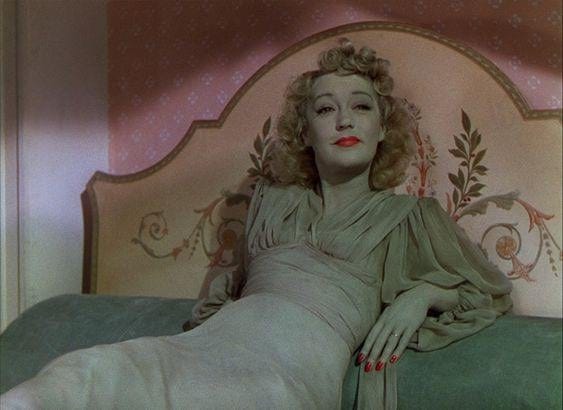
Despite the supernatural and fantastical themes, Blithe Spirit deliberately rejects emotional realism and horror in favor of stylized farce and witty controlled dialogue. Coward uses wit and absurdity to transform death and marriage into comedic mechanisms. Coward was not trying to write a moral drama or a psychological deep-dive. He was trying to achieve something more specific: a highly controlled, stylish farce that satirized marriage, death, and upper-class British life.
He does this by turning death into something trivial and comedic. Apart from a few lines about how Elvira and Charles missed each other and were happy to see each other again, the play does not focus for long on the tragic reality of death. Elvira being a ghost is more inconvenient than tragic. Coward also uses supernatural elements not for fear but to cause social chaos within the plot.
The play also satirizes marriage and upper-class British life. When Elvira returns and interrupts Charles and Ruth’s marriage, Charles reacts more annoyed than emotional with his love for each of his wives. Charles and Ruth seem to care more about embarrassment, like what their guests might think of them acting oddly, than the fact that there is literally a ghost in their house.
It is also important to add the context that this play was written during World War II. Audiences at the time were surrounded by death and uncertainty. One thing this play was trying to achieve was bringing light to such a dark topic without directly confronting the actual darkness of it. In this way, the play really reminds me of Alfred Hitchcock’s The Trouble With Harry (1955).
The question is whether or not the play achieves all of the things it set out to. I would say yes, almost perfectly. It is extremely precise in structure. It includes mostly first level dialogue, and the plot moves almost entirely through conversation. When performed how it is intended, it should display classic farce timing with its entrances, misunderstandings, physical and situational comedy, and reversals. Each of these things escalates in absurdity in a very deliberate way as the play progresses. The characters are intentionally shallow and detached, and this does risk feeling emotionally empty and artificial. Except Coward is not failing to create depth, he is intentionally rejecting it.
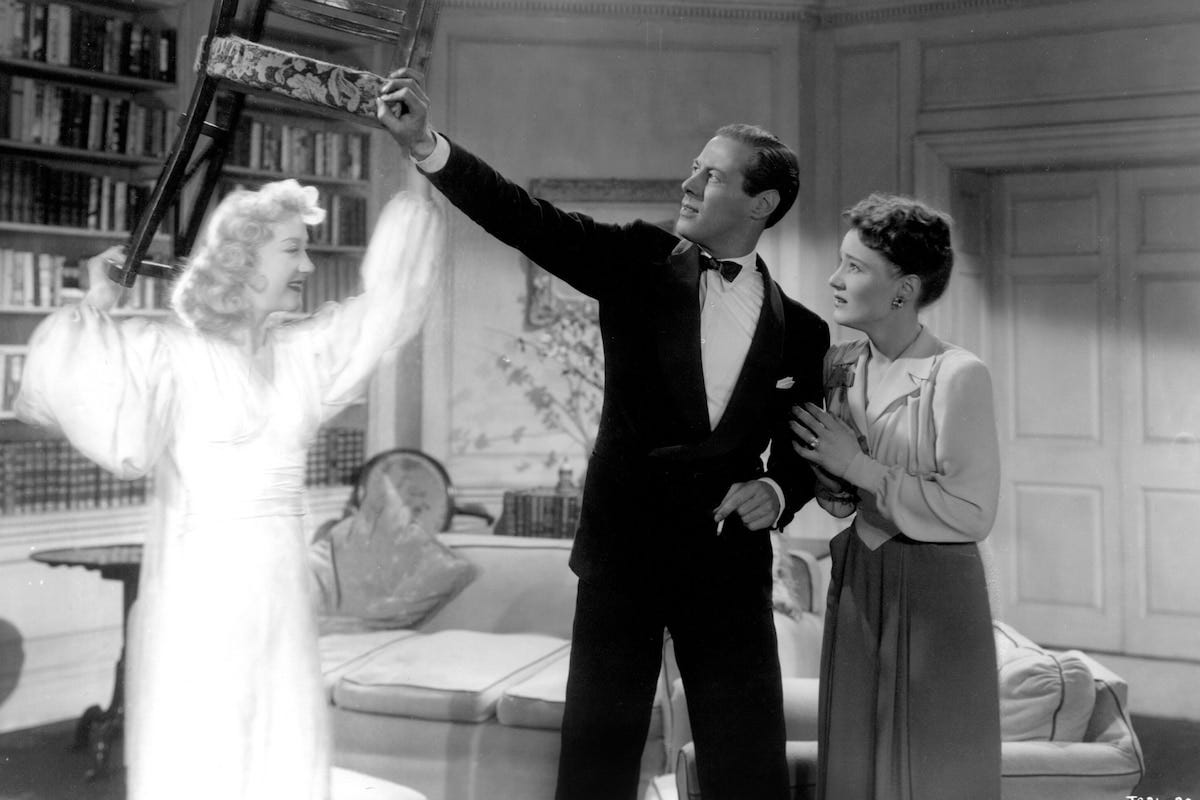
I identified a few elements from the work I saw that I could add to my own repertory of techniques. One thing I really appreciated was how controlled and intentional each line of dialogue was. The dialogue reads like music. It was quick, sharp, and rhythmic. There was no unnecessary realism like filler words or real life logical reactions to reveals. The play allows the dialogue to be the action. This is another way it really reminds me of one of my favorite films of all time, Alfred Hitchcock’s The Trouble with Harry. I already admired the way The Trouble with Harry handled dark topics with such an unusual tone and such unusual dialogue, and I am very glad to have found another example of this in another piece of art.
Another thing is the way that the character contrast acts as an engine for the plot. Personally, I am usually drawn to strong characterization. One thing I really appreciated was the way that Ruth and Elvira’s personalities foil each other. It really highlights how fun and silly Elvira is, and the reactions Charles gave to it all really added to the situation. His character was almost like a Cary Grant typecast stripped of control over the situation that Cary Grant would usually have.
Coward, Noël. Blithe Spirit, 1941
I'm glad I'm not the only person repurposing film assignments for substack. Great work! hope you got a good grade